
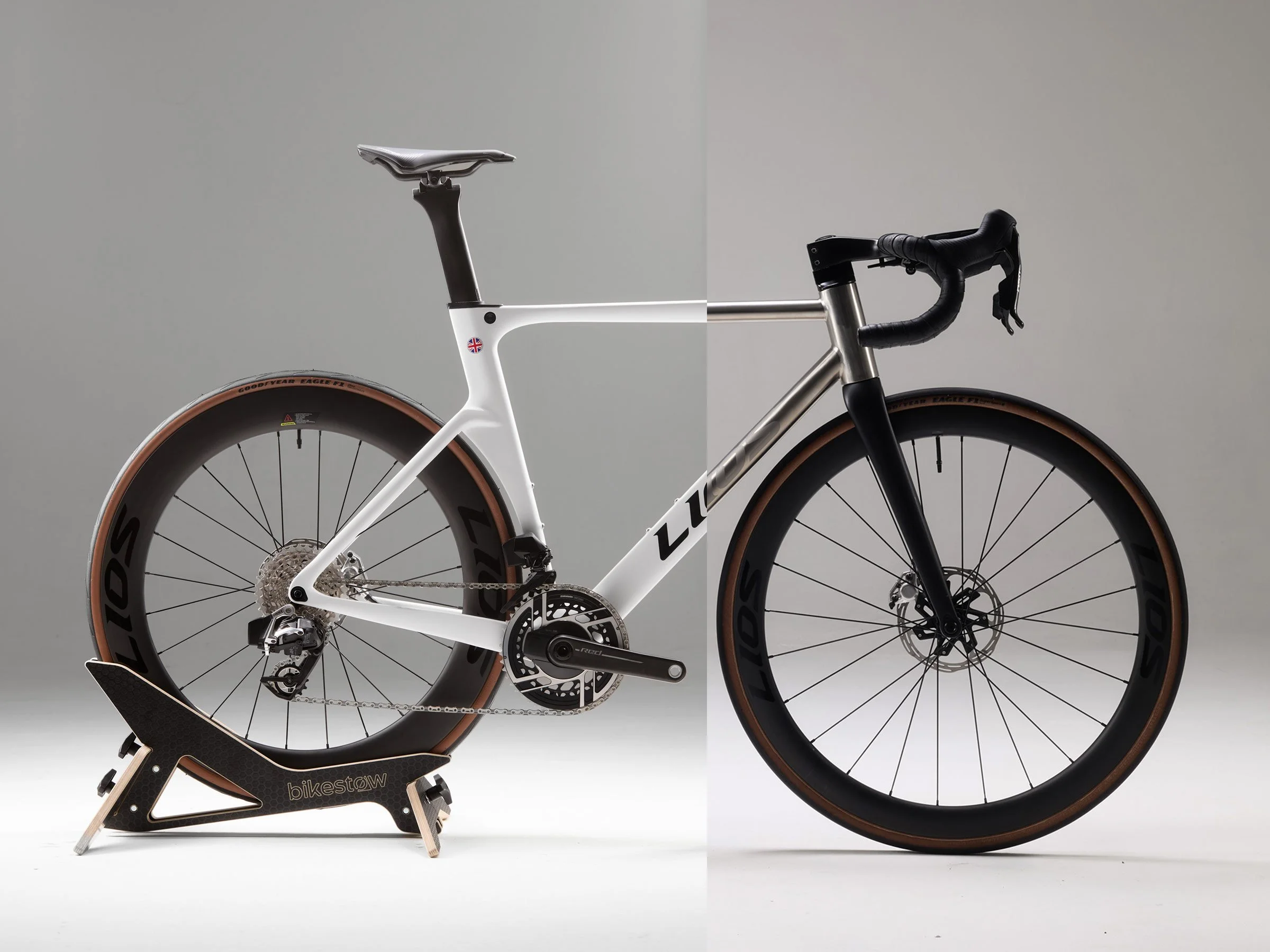
Why this question keeps coming up
For riders considering their next big bike upgrade, few questions come up more often than this one. Carbon or titanium. Two very different materials, both capable of delivering outstanding performance and both surrounded by strong opinions.
Most riders asking the question already own a carbon bike. Some are curious about titanium after years of riding carbon. Others are reassessing priorities, thinking more about longevity, comfort and ownership than outright race performance. Some are returning from injury. Others simply want something that feels different and more personal.
This article is not about crowning a winner. Bike choice is subjective, physical and emotional. Instead, the aim is to explain the real differences between carbon and titanium road bikes, how they behave on the road and who each material is best suited to.
Carbon and titanium at a glance
At a high level, carbon and titanium exist at opposite ends of the manufacturing spectrum.
Carbon fibre frames are moulded, layered and cured. Their strength and stiffness come from fibre orientation and resin systems. Titanium frames are fabricated from metal tubes that are cut, shaped and welded by hand.
Both approaches can produce exceptional road bikes. The difference lies in how they get there and what that means for ride feel, durability and ownership.
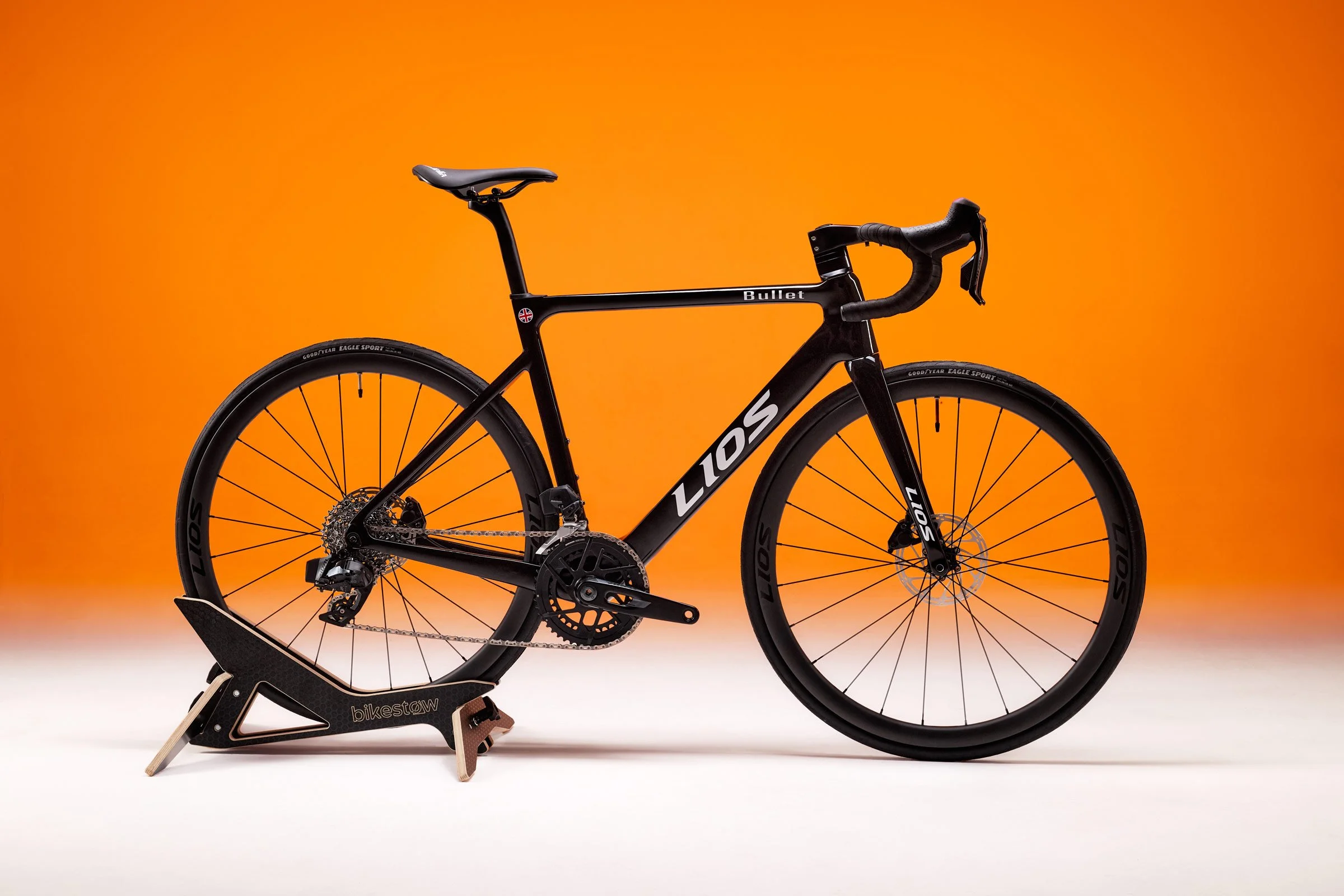
LIOS Bullet 5.56 endurance road bike with SRAM Rival E1 AXS groupset.
Carbon road bikes: strengths and realities
Carbon has become the dominant material in modern road cycling for good reason.
Strengths of carbon road bikes
Carbon fibre allows engineers to tune stiffness and compliance very precisely. By changing fibre layup, wall thickness and shape, designers can create frames that are extremely light, laterally stiff and aerodynamically efficient.
This makes carbon ideal for:
Weight focused builds.
Aerodynamic optimisation.
Race oriented performance.
High stiffness to weight ratios.
Carbon frames are also well suited to mass production. Consistency between frames is high, and large manufacturers can offer multiple models with clear performance differentiation.
The realities of carbon in real world use
Carbon does have limitations that are worth understanding.
Crash damage is not always visible. A frame may appear intact but suffer internal delamination that compromises long term safety. While carbon can be repaired, repairs are specialist, variable in cost and not always appropriate depending on damage location.
Fatigue behaviour is also different to metal. Carbon does not bend or yield in the same way. Over time, repeated stress can degrade the resin and fibres, especially in high load areas.
Carbon frames are often replaced rather than kept long term. For riders who upgrade frequently, this is rarely an issue. For those thinking in decades rather than seasons, it can be a consideration.
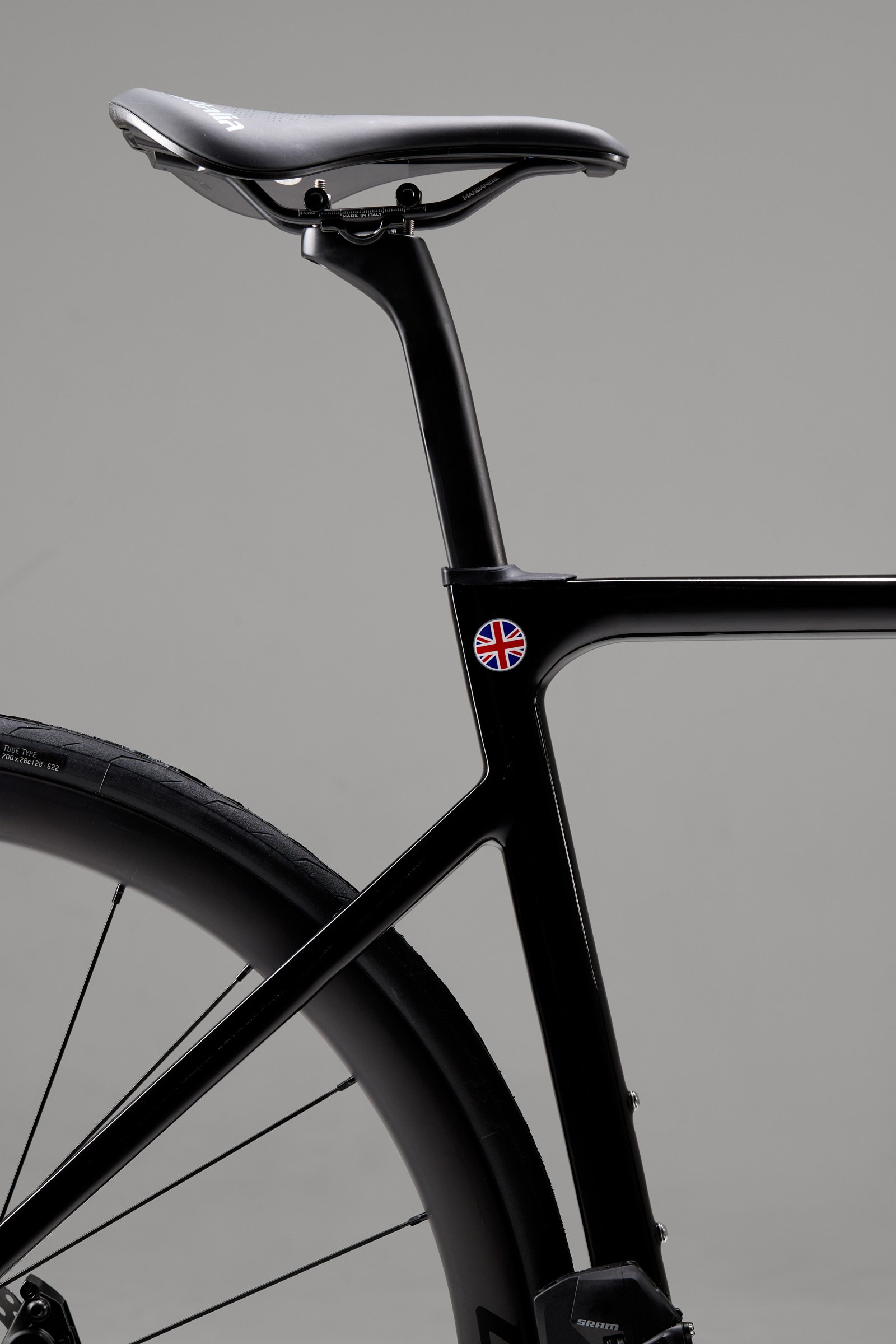
Incredibly smooth joins can be achieved with carbon.
Titanium road bikes: strengths and realities
Titanium occupies a very different space in the cycling world.
Why riders are drawn to titanium
Titanium offers an exceptional strength to weight ratio, outstanding fatigue resistance and complete corrosion resistance. A well built titanium frame can last decades without degradation.
This is why many riders describe titanium as a ‘bike for life’.
Raw titanium does not require paint. There is nothing to chip, crack or fade. The material develops character rather than wear. For many riders, this creates a stronger emotional connection to the bike.
Titanium also has a natural ability to absorb high frequency vibration while remaining responsive under load. When engineered correctly, this produces a ride that feels smooth, stable and confidence inspiring over long distances.
The realities of titanium
Titanium frames are labour intensive to produce. Tubes must be cut, shaped and welded by hand. Heat control during welding is critical to maintain material integrity.
This craftsmanship is a major reason titanium frames typically cost more, especially when geometry is bespoke and built one-off for each rider.
Weight wise, titanium generally sits between aluminium and carbon. While it may not match the very lightest carbon frames, the difference is often smaller than expected (~750g) once real world components are added.
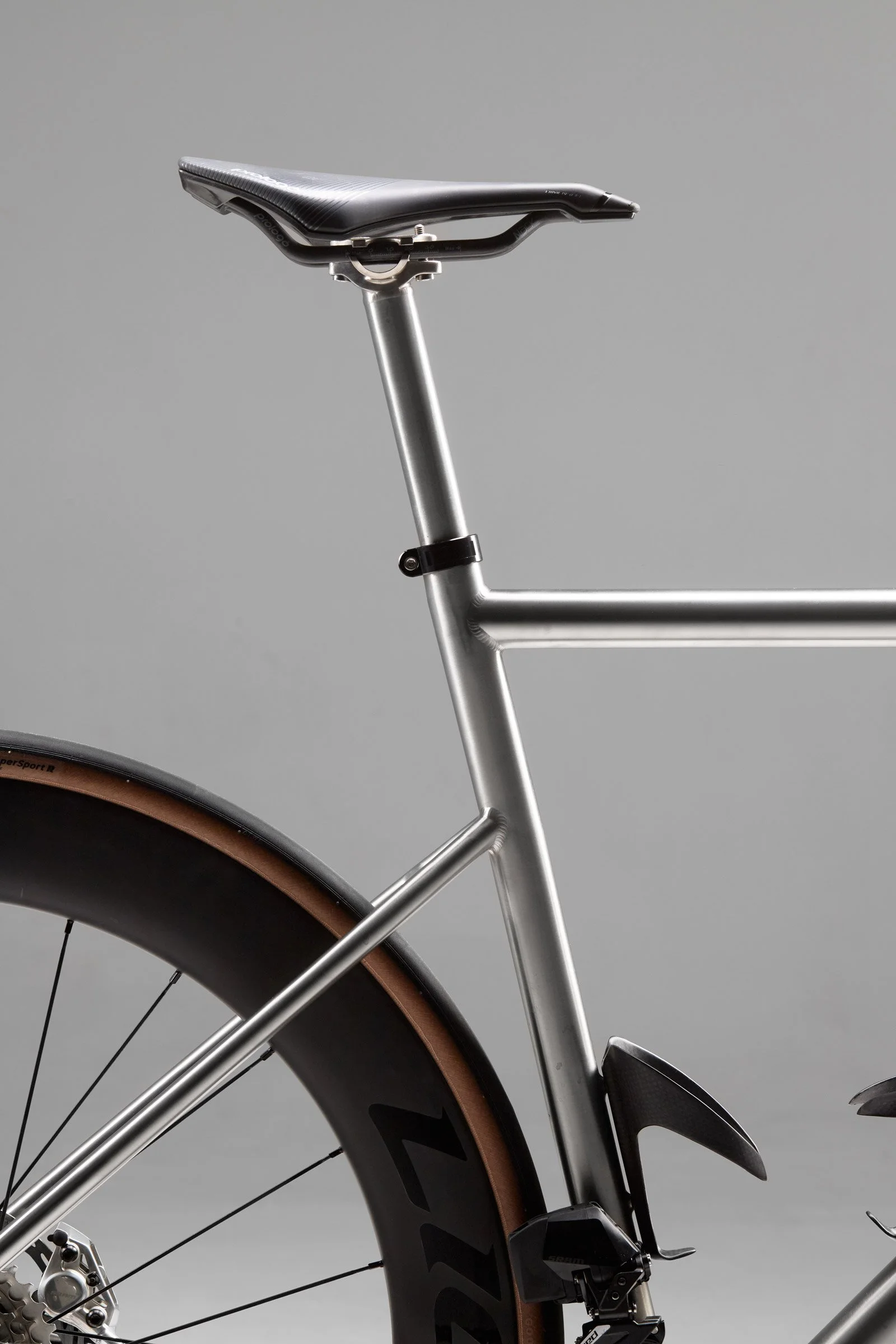
Exquisite welds are part of the appeal with titanium road bikes.
Ride feel and performance on the road
Ride feel is where subjectivity takes over, yet it is also where riders form their strongest opinions.
Carbon road bikes often feel very direct. Power transfer is immediate. Acceleration is sharp. On smooth roads, this can feel exhilarating and fast. On rougher surfaces, feedback can be more pronounced depending on frame design and tyre choice.
Titanium road bikes tend to feel calmer. They maintain speed well, track smoothly through imperfect surfaces and feel less fatiguing over long rides. The sensation is not softness, but controlled compliance combined with stability.
Neither feel is inherently better. They are simply different responses to the same inputs.

LIOS Road Crew members riding respective titanium and carbon bikes.
Fit, geometry and how LIOS approaches both materials
Fit is one of the most important factors in how a bike feels, regardless of material.
At LIOS, titanium and carbon are approached differently because the materials and manufacturing methods allow different levels of freedom.
Titanium at LIOS
Our titanium frames are fully bespoke. Each frame is designed from scratch for the individual rider. Geometry, tube selection, clearances, mounts and routing are all defined specifically for that build.
This one off approach is a major reason our titanium frames cost more than our carbon offerings. The price reflects the time, design work and fabrication involved. Many brands sell off the peg titanium frames at similar prices. At LIOS, bespoke geometry is included as standard.
Carbon at LIOS
Our carbon frames are available in multiple frame sizes. We select the correct size based on the rider’s biomechanics, flexibility and goals.
Final performance is then refined through component choice, including:
Crank length
Stem length and angle
Bar width
Spacer stack
Gearing
Both approaches are valid. One starts from a blank sheet of paper. The other refines a highly developed platform. Both involve a Retül 3D motion analysis bike fit, which is included in the price of the bike.


Durability, ownership and long term value
For riders reassessing priorities, durability and ownership matter more with time.
Carbon frames excel in performance focused use, but are often treated as consumables over a long enough horizon. New standards, new shapes and new models encourage regular replacement.
Titanium frames resist that cycle. They age slowly. They do not corrode. They can be reconfigured with new components over decades. This is where long term value becomes clear.
Ownership shifts from product to companion. That matters to some riders more than others, but it is a recurring reason people move towards titanium later in their riding life.

Ethel with her LIOS Titanium Gravel bike prior to the start of the 2025 Gravel Bike World Championship in Maastricht.
Who carbon road bikes are best for
Carbon road bikes are an excellent choice for riders who:
Prioritise low weight and aerodynamics.
Enjoy race focused performance.
Upgrade bikes regularly.
Want the latest technology and shaping.
Ride primarily on smoother roads.

Who titanium road bikes are best for
Titanium road bikes are well suited to riders who:
Want long term ownership.
Value comfort and ride feel over distance.
Are torn between materials and want something different.
Are returning from injury or managing physical constraints.
Appreciate craftsmanship and individuality.

A personal perspective
I’m fortunate to have both carbon and titanium bikes available to me. I don’t see that as a contradiction.
I choose which bike to ride based on the type of ride I’m doing and how I feel that day, both physically and mentally. Some days call for the sharpness of carbon. Others suit the calm confidence of titanium.
What I don’t believe in is dismissing one material in favour of another. Too many reviews do exactly that. Cycling is personal. What works brilliantly for one rider may not work at all for another.
Choosing the right bike for you
The difference between a carbon and titanium road bike is not about right or wrong. It is about intent.
Carbon excels at delivering cutting edge performance. Titanium excels at delivering longevity, comfort and connection.
The right choice depends on what you want from your riding now and how you see yourself riding in the future. Understanding those priorities is more important than the material itself.
In the next part of this series, we will look at the differences between aero and endurance road bikes and how geometry and design influence ride characteristics.
Frequently asked questions
Is titanium better than carbon for road bikes?
Neither is objectively better. Titanium offers durability and comfort. Carbon offers lower weight and aerodynamic freedom.
Do titanium bikes last longer than carbon bikes?
In most cases, yes. Titanium has excellent fatigue resistance and does not corrode.
Are titanium bikes heavier than carbon bikes?
Generally yes, but the difference is often smaller than expected in real world builds.
Is titanium worth the money?
For riders seeking long term ownership and bespoke geometry, many consider it excellent value over time.
Can titanium bikes be raced?
Absolutely. Well engineered titanium frames perform exceptionally in racing environments. We developed our titanium ‘Road Race’ design specifically so it could be raced.
